



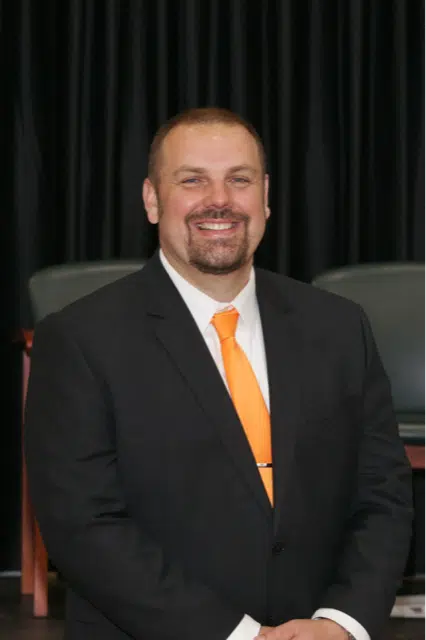
CLINTONVILLE, WI-Clintonville Public School District Salaried Staff will be receiving a 5.2 percent increase in pay and hourly staff will be receiving a 4.0 percent pay increase. Troy Kuhn, Clintonville Superintendent, and Lindsay Norder, Clintonville Business Manager made the recommendations and both of these recommendations were discussed and approved at the April 11, 2022 School Board Meeting.
Both Kuhn and Norder state that their recommendation was due to the fact that districts have been forced to change the way of doing business.
First and foremost, how school boards and administration interact with their employees drastically changed over ten years ago. In 2011, when the Wisconsin Budget Repair Bill, known as Act 10, was proposed by Governor Scott Walker, and later passed, it changed the educational business practice landscape. At that time, this bill affected collective bargaining, compensation, retirement, health insurance, and sick leave for public employees. Districts
across Wisconsin were forced to make the decision to continue to offer pre Act 10 benefits or make major cuts to save money.
Second, since Act 10 passed, the desire to become a teacher/educator has decreased. There are very few teachers graduating from post-secondary educational systems. The lack of graduates has driven up the cost of new employees as well as the cost for retaining quality educational staff.
Many school districts send representatives to local college career fairs. Kuhn and his administrative team have been attending these career fairs and have quickly realized that all school districts are competing for the same people.
“Every district comes with their flashy signs, food, district swag, etc. to try and attract all potential teachers to approach their table,” Kuhn said. Today’s
graduating educators have more control and opportunities than ever before. They get to pick and choose what school districts they want to approach and potentially teach at. Graduates with high demand certifications like technical education, agriculture, FACS, sciences, math, and college ready courses, are able to ask for extra incentives for employment.” Kuhn added that has forced them to run the district like a business and make decisions that they have not had to previously make.
“We need to be creative in our hiring processes and compensation packages,” Kuhn explains. Norder explained that the district needs to attract future students, parents and employees. “Schools are running more like private businesses. With the implementation of school choice and the private voucher program, public schools need to ensure that funding does not leave the public schools and go elsewhere.”Norder added, without students, they cannot afford the staff.” Kuhn and Norder also claim that the Covid-19 pandemic caused teacher burnout. “The worst thing for the educational
system as a whole is when quality teachers leave education for private industry.”
Kuhn expressed that the Clintonville School District taxpayers made the correct decision in passing a $37 million dollar referendum. The referendum money will not only improve all areas of the district, but allow partnerships with local businesses. The referendum has allowed staff to share spaces as well as reduce maintenance costs. It has also allowed for future consolidation or expansion as necessary. Kuhn asserts “We, the district and community,
cannot afford to consolidate. Clintonville must look to expand. We must figure out how to attract families and students to Clintonville. I have been working with local businesses, colleges, and city leaders to determine what changes we can make.” Kuhn said not only will it help the local businesses and the community, but also the school district.
“The school district is the heartbeat of the community. Without it, the community will suffer. In addition to attracting future families and students, we must also “take care” of those who are already employed here, those who are committed to improving the district and community. This is why we proposed a substantial increase.” According to Kuhn inflation is at its highest since the early eighties. We have staff driving from great distances. The easiest way for them to save money is to find a job closer to home or receive a raise by going to another district.
Kuhn and Norder wanted to hear the voices of the staff to determine other ways they cansupport the current staff and attract new staff to the CPSD. Therefore, they held many meetings with each group of employees (teachers, custodial, paraprofessionals, clerical, etc). At the meetings they discussed current and past trends, as well as proposed changes to the employee handbook. “These meetings were great. Not only did we learn a lot about the history of the district, but we were also able to give the employees a safe platform to address their concerns. District Office Administration are not scary people. We may have big titles, but our job is to work with all employees, address their needs, provide a challenging and appropriate education, all
while being fiscally responsible with taxpayer dollars,” Kuhn stated.
Kuhn and Norder have shared the information they have gathered with the school board during closed session. In addition to the raises, Kuhn and Norder proposed a new salary schedule. The schedule was built over several months with collaboration of the Salary and Benefits Committee. The salary
schedule decreased from seven lanes to three, but increased from seventeen levels to thirty six. This allows for more equal raises throughout the employee’s career. The new salary schedule is in the best interest to ensure financial stability to the district. “If CPSD were to give huge
raises upfront it would put a financial strain on the district as well as limit the raises we can give to our veteran staff.” Because of the new salary schedule, raises for this year will not be equal, but will range from $1000 to $2000, depending where the staff member is placed on the new salary schedule. This is why CPSD calculated the average raise for staff and not a set amount. Norder explains, “The 5.2 percent raise is a total package. Not only does this include an increase in salary (3.75 percent average), but also the increase in health insurance premiums and a reduction of two contracted days. The district’s health insurance will increase by 6 percent. When calculating the average salary increase, the district’s contribution to the insurance premium increase, and reduction of two contractual work days, the total increase isroughly 5.2 percent.”
As spring draws near, the announcements of teacher retirements and teachers leaving to go to other districts begins. “Everyone is scrambling. We lost two really good candidates last week to “Big Valley Schools.” They beat us to the punch. We thought we were early enough in getting interviews set up, but apparently not,” Superintendent Kuhn says. As part of the proposal, Kuhn and Norder also explained that even with an increase in insurance
and supply costs, the district must still provide an increase in wages. CPSD must have quality educators and quality programming, or people will leave the community. That would be detrimental. Kuhn and Norder provided the school board with numerous data and resources to justify this proposal on March 28, 2022. Because there was so much information, the Board of Education and Administration agreed to table all proposals. Kuhn states, “It was a lot of
information and a lot of moving pieces. Norder and I worked for weeks on our proposals. To try to process it all in one closed session was overwhelming. Therefore, tabling the proposals were in the best interest for all stakeholders. ”One of the biggest questions that everyone is going to ask, “Where is this money coming from? ”Kuhn and Norder have stated that they have networked with school districts across the state of
Wisconsin. Some have not yet determined where the money will come from, others have very strategic plans in place. “In Clintonville, we have a well thought out short term and long term financial plan. Administration, Directors, Board Members, and other stakeholders, are meeting
regularly to determine funding. Currently, we have a lot of different projects going on, including the referendum. This has allowed us to review funding sources, and where to best allocate our money. Fund 10 is our general budget, Fund 80 is our community service budget (Rec Center,
Daycare, and Middle School Athletics), Fund 27 is our Special Education budget. Other funding sources include: Funding for Covid Relief, Title Funding, and numerous other grants. Referendum funds have resolved many long term facility maintenance needs. As we review these revenues, we determine what is a necessity versus a wish list item. It is a lot to balance, and this is why we all must be on the same page and have the same goals for district spending.”
Kuhn and Norder both stated that the Auditors have requested we build the General Fund Balance back up to the policy target of 25 percent of the preceding years Fund 10 expenditures, which cannot be done in one year. That would force us to do massive layoffs and program cuts.
This must be a long term plan. However, not giving raises to staff could result in the current staff seeking employment elsewhere, therefore resulting in an immediate disservice to the education of Clintonville students. Kuhn’s final comments are directed at our elected officials. “The final variable is our elected legislators. Rural school taxpayers cannot afford operating referendums, therefore we must rely on the per pupil formula aid that provides a dollar amount for every student. We need legislators to understand that rural districts are struggling, and we need financial support. We need to lobby for increased funding, more grant opportunities, an increase to per pupil aid, a less strenuous teacher education licensing system, and tuition reimbursements for future educators.”
This summer, Kuhn and Norder plan to meet with local and state legislators to lobby for not just Clintonville, but for all schools across the state of Wisconsin.










Comments